For Elementary Schools
(Grades 3–5)
Teach Students the Difference Between Conflict and Bullying
The Bullying vs. Conflict™ Instructional System gives students the language to solve problems independently — protecting valuable classroom time.
View School Packages
Classroom sets • Educator guides • Implementation tools

Most Schools Don’t Have a Bullying Problem.
They Have a Language Problem.
When students lack language, every disagreement becomes “bullying.”
When students are taught the difference between conflict and bullying, they:
• Reduce unnecessary office referrals
• Solve peer issues independently
• Strengthen classroom discussion
• Build accountability
This is a literacy solution to a behavior challenge.
What the System Teaches Students
Include:
• The 4-Part Test™ (Repeated, Intentional, Power Imbalance, Harm)
• Clear student language
• Classroom discussion structure
• Leadership vocabulary
Framework addresses these through shared language and structured classroom implementation.

Angela M. Odom presented at the NABSE International Conference on bullying vs. conflict and created a literacy-based system that helps students solve peer conflicts independently.
Program at a Glance
Grades: 3–5
Format: Classroom read-aloud + discussion
Time: 20–30 minutes per session
Group Size: Whole classroom
Best for: Schools seeking a literacy-based approach to peer conflict.
Implementation Packages
Includes:
Classroom Set (25 Books)
• 25 books
• Educator discussion guide
• 4-Part Test™ classroom poster
• Implementation checklist
Best for: Individual classrooms or grade-level testing
Grade Level Set
100 books
Best for: grade-level implementation
Schoolwide Implementation
Custom packages available
Best for: full-school adoption
How Schools Typically Implement the Bullying vs. Conflict™ Instructional System
Most schools introduce the framework in three simple steps.
Step 1
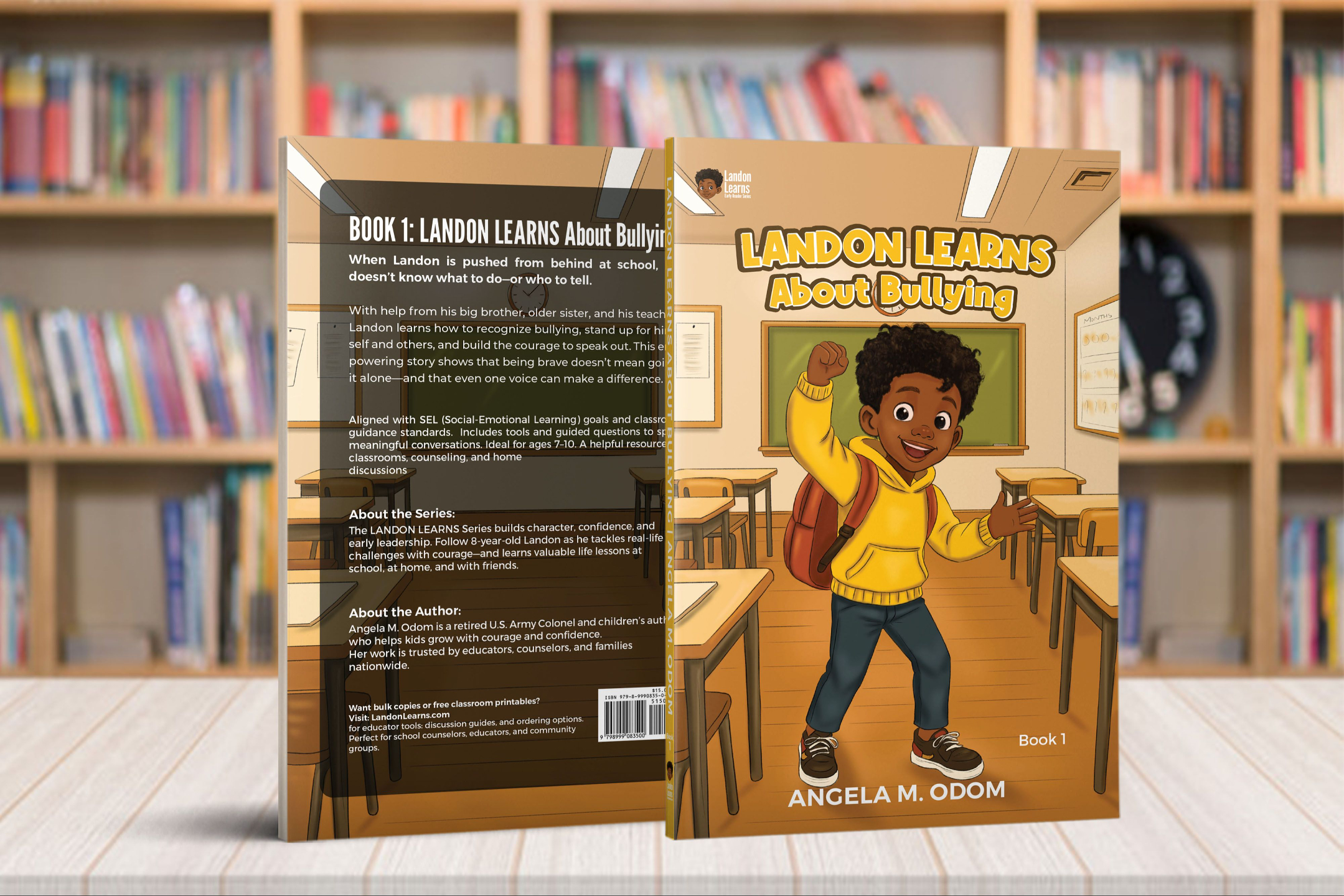
Teachers read Landon Learns About Bullying with their class and introduce the 4-Part Test™ during a short classroom discussion.
Teachers can introduce the framework in about 20–30 minutes.
Step 2
Students begin using the shared language during everyday peer conflicts in the classroom, hallway, playground, and bus.
Teachers guide students through the 4-Part Test™ to determine whether the situation is conflict or bullying.
Step 3
Over time, students begin solving minor peer conflicts independently using the framework.
This reduces unnecessary office referrals and helps protect valuable instructional time.
Trusted by Educators Nationwide
Angela M. Odom has presented nationally on bullying vs. conflict and provides structured literacy-based behavior tools for Grades 3–5 schools.


Got Questions? We’ve Got Answers!
1. What grades is the Bullying vs. Conflict™ system designed for?
2. How is the system used in the classroom?
3. How much preparation is required for teachers?
4. What outcomes are schools seeing?
5. Is this a bullying prevention program?
6. Can this be implemented schoolwide?
7. How long does it take to introduce the system?
8. What comes in a classroom set?
9. Is this aligned with SEL learning goals?
10. Can schools order multiple classroom sets?
Bring the Bullying vs. Conflict™ System to Your School
Schools often begin with a classroom or grade-level pilot before expanding schoolwide. Request pricing and implementation details for your school.
Request School Pricing